
Coin Narrative 2020

A year-end commentary by Daniel Pichler, board member of Bitcoin Austria
Let’s start with something everyone agrees on: “We’ve had a strange year”, in many ways. The Bitcoin price keeps climbing and people are asking questions about Bitcoin and the “alternatives.” Admitting that “alternatives” exist is enough to be considered an outsider in some circles. On the other hand, I’ve also been called a “Bitcoin maximalist” who doesn’t see the big picture of DeFi (Decentralized Finance) apps…
You can’t make everyone happy. Here’s my perspective on the market, Bitcoin, and the alternatives as the year turns.
1. Bitcoin
A good time for Bitcoin maximalists
The former number 3 by market cap, Ripple (XRP), is crashing after the SEC (U.S. Securities and Exchange Commission) gave the green light to go after their former darling just before Christmas. Bitcoin’s dominance stands at 70% and could even reach 80%. That was the level from which it dropped significantly in February 2017, once it became clear that transaction fees on Bitcoin were the new normal.
CoinMarketCap - Market Cap Dominance Charts
Bitcoin’s scaling solution, the Lightning Network, continues to develop and spread. Usage, however, remains quite modest. Lightning payments often require multiple attempts to find a route with sufficient liquidity, and large transactions are barely feasible. But the market is slowly waking up. I expect Lightning to become more relevant and to show both its strengths and weaknesses.
It’s certainly a good idea to try Lightning yourself and build up experience. Companies that made long-term Bitcoin investments in 2020 are unlikely to switch to alternatives quickly and will more likely bet on Lightning.
Get ready for the Lightning Network: Set up your own Lightning node! Check out these projects:
- Umbrel - Bitcoin & Lightning node for home
- Raspiblitz - DIY Lightning node on a Raspberry Pi
- Strike (if KYC doesn’t bother you)
- Breez (no KYC)
2. Bitcoin’s Competition
How are the direct competitors doing? They’re underperforming… but they offer privacy.
a. Bitcoin Cash
Bitcoin Cash, the best-known Bitcoin fork, is underperforming… badly. The market doesn’t seem to value the “hotfix” of capacity increase through bigger blocks, at least not in 2020. Even if BCH/BTC were to rise by a factor of 10, Bitcoin Cash would only be back at its starting level.
There are, however, new features. CashShuffle is an easy-to-use mixer that can be used very cheaply thanks to BCH’s low fees. On Bitcoin, JoinMarket has seen only sparse use so far, though this could change with the activation of Taproot.
Bitcoin Cash is still searching for its place in the crypto world. Its target audience is people who need low fees, but the action right now is on Wall Street, not in Venezuela. “Hodlers” couldn’t care less about higher transaction fees. Bitcoin Cash’s scaling approach with big blocks is not a permanent solution, and with two additional forks (Bitcoin Cash ABC and Bitcoin SV), the community has been split into several camps.
b. Monero
Permanent privacy and one of the rare alternatives that even some Bitcoin maximalists view positively. The main reason is likely that Monero could also help push Bitcoin toward better privacy. Regulators strongly dislike Monero (partly because it has become the number one coin on darknet markets), but that earns it considerable sympathy among libertarian Bitcoiners.
Monero’s price performance has also been below average. Perhaps the market expects Taproot and the Lightning Network to provide sufficient privacy for Bitcoin in the future, reducing Monero’s relevance.
c. ZCash
Optional privacy. I think ZCash would have a significantly higher market cap if it had simply been a Bitcoin fork. Instead, ZCash is a technically interesting coin but one without users. Zero-knowledge proofs are a fascinating technology, but is that alone enough to justify a separate blockchain? The market has so far given a clear and loud “no,” though ZCash only just had its first halving. It will be interesting to see what happens.
3. Ethereum
The Maximalists 2.0
Ethereum had the chance to do better than Bitcoin. To stay positive briefly: like Bitcoin, Ethereum is a victim of its own success. The idea is great, tokens are increasingly being locked long-term in Ethereum 2.0 staking nodes, there’s a huge developer community, and easy-to-use dApps (decentralized applications).
And I’m not even talking about DeFi and governance tokens here, which became the kickstarter for dApps last year. I’m talking mainly about Uniswap and MetaMask. They have great usability, and I’d love to use Uniswap more often instead of centralized exchanges, but…
The downsides:
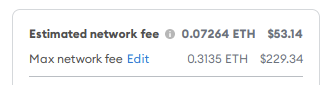
Ethereum now has the same problems Bitcoin had in 2017. Clean scaling is hard work, and for smart-contract blockchains probably even harder. Yes, there are numerous attempts, especially with dedicated tokens (Raiden, Loopring, OmiseGo), but the additional effort and high complexity create overhead and extra risks that nobody wants.
The new Beacon Chain of Ethereum 2.0 won’t change anything about the high fees either, not in 2021… or 2022… Ethereum needs to be careful not to lose its high-quality developer community. New talent is already avoiding Ethereum because of the ever-increasing fees, and 2021 could see the “brain drain” at Ethereum accelerate.
While the price of ETH relative to Bitcoin is well below its all-time high, it was nonetheless a fairly productive year for Ethereum.
4. Ethereum’s Competition
The competition is still weak. Polkadot, Cardano, Avalanche, Cosmos, and Tezos are trying to position themselves as attractive alternatives. Ethereum is miles ahead in terms of adoption, community, and developers. But it will be interesting to see whether history repeats itself and disillusioned developers move on to newer alternatives… similar to what happened with Bitcoin in 2017.
Some of these new blockchains claim to have already solved all scaling problems. But I question whether this new competition is far enough along for any noticeable talent migration to happen in 2021.
One more thing to consider: if you want to bet against Ethereum, not all competitors have the same “value proposition.” Buying new tokens simply because of their (low) market cap is a bad idea. Interest in Ethereum seems large enough, and the willingness to pay high fees is currently there. Perhaps that’s a positive sign for Ethereum.
The English original was originally published on medium.com.
More articles

Earthquakes in Venezuela: Bitcoin Donations That Arrive Directly
Two major earthquakes hit Venezuela. Jugend Eine Welt is collecting Bitcoin donations for emergency relief, sent directly across borders with no bank and no middleman.

Fundraiser: A Bitcoin Landmark for Austria
For its 15th anniversary, Bitcoin Austria is building a permanent Bitcoin landmark in Vienna, one of only 21 worldwide. Help make it happen!

National Election 2024: Who Votes Bitcoin?
Bitcoin Austria surveyed candidates in the 2024 Austrian parliamentary election about Bitcoin. Five candidates from NEOS, KPÖ, and LMP responded.

Unterstütze unsere Unabhängigkeit
Wir finanzieren uns ausschließlich durch Spenden. Keine Sponsoren, keine Werbung – so bleiben wir unabhängig.